Projects
SDM meets Isotopes
We develop a novel particle-based Monte-Carlo cloud and precipitation microphysics model resolving the dynamics of water isotopic composition upon kinetically limited diffusional processes and particle collisions.

SDM Adaptive Timestepping
The project introduces an original adaptive time-stepping logic for the SDM Monte-Carlo coagulation algorithm.

PySDM
PySDM is a particle-based cloud microphysics package with box, parcel & 1D/2D prescribed-flow examples in Python, Julia and Matlab. PySDM is a Pythonic high-performance (CPU/GPU) implementation of the Super-Droplet Method (SDM) Monte-Carlo scheme for collisional growth (Shima et al. 2009) with original drop-breakage and adaptive-time-stepping extensions.



PyPartMC
PyPartMC is a C++-implemented Python interface to PartMC, a particle-resolved Monte-Carlo code for atmospheric aerosol simulation. The Python API facilitates using PartMC from Julia, Matlab, etc.
PyMPDATA
PyMPDATA is a Numba-accelerated Pythonic implementation of the MPDATA algorithm of Smolarkiewicz et al. used in geophysical fluid dynamics and beyond for numerically solving generalised convection-diffusion PDEs. PyMPDATA ships with examples in Python, Julia, Rust and Matlab.




Cloud Physics Outreach
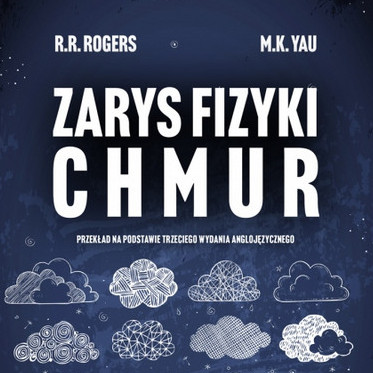
We engage in public outreach activities aimed at popularising cloud physics and addressing gaps in the availability of academic materials in both Polish and English, including books, Wikipedia articles and coding tutorials.

Numba-MPI
Numba-MPI provides Python wrappers to the C MPI API callable from within Numba JIT-compiled code and enabling distributed-memory parallelism.

MPDATA meets Black‐Scholes
We apply the MPDATA scheme to option pricing by reformulating the Black-Scholes-Merton equation as an advection problem. This novel application enables all PDE terms to be handled consistently with a single non-oscillatory, high-order and positive-definite numerical operator.
open-atmos-jupyter-utils
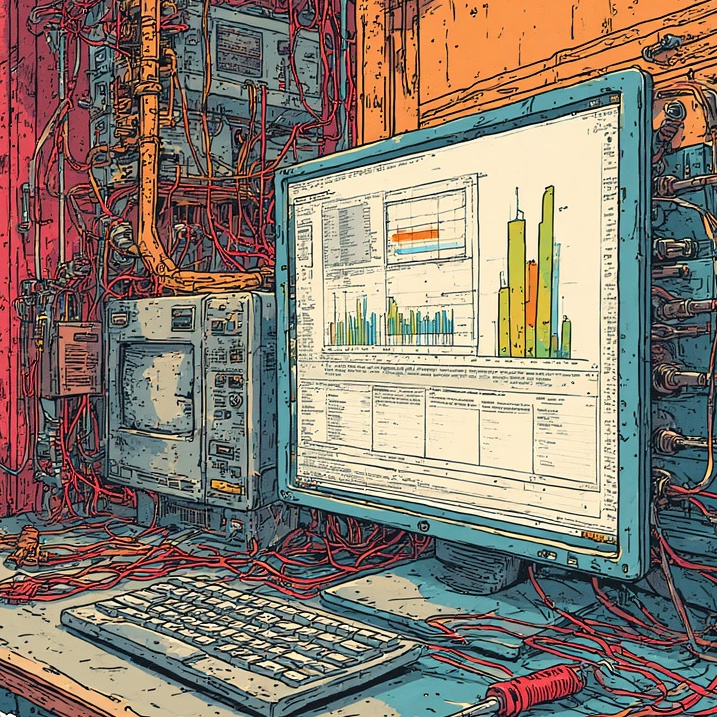
We develop and maintain utility routines for embedding vector graphics and animations in Python Jupyter notebooks using matplotlib (with focus on testing and Colab & GitHub compatibility).
HPC DIY
Ceci n'est pas un superordinateur.
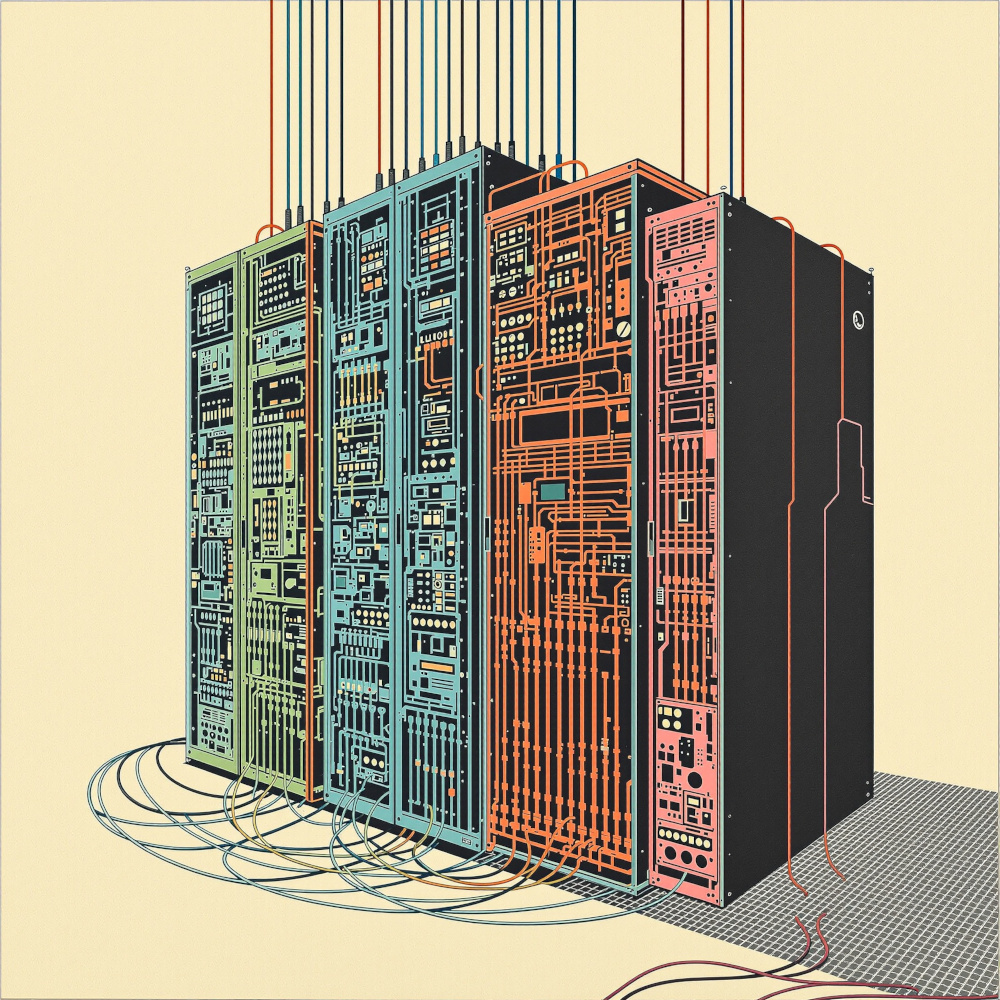
We are building, from scratch, a multi-node GPU-enabled computing cluster using Raspberry Pi hardware, and open-source software stack (Linux/Slurm/OpenMPI/…)
HABEMUS Python
Resources to help students combine reproducible research, software engineering with CI automation, and high-quality, code-based typesetting to achieve the “executable manuscripts” goal: engineer your documents to be reproducible, automated, and aesthetic by design!